Roof & gutter check · 2 minutes
By the time a blocked gutter shows itself, it's usually inside your house.
Overflow, leaking joints, sagging and rust don't show from the ground — they stay hidden until water's in the eaves, down a wall, or through the ceiling.
The signs are easy to catch, but only while it's raining. Here's the two-minute check — and if something looks off, send us a photo for a straight read. No charge for the look.
01
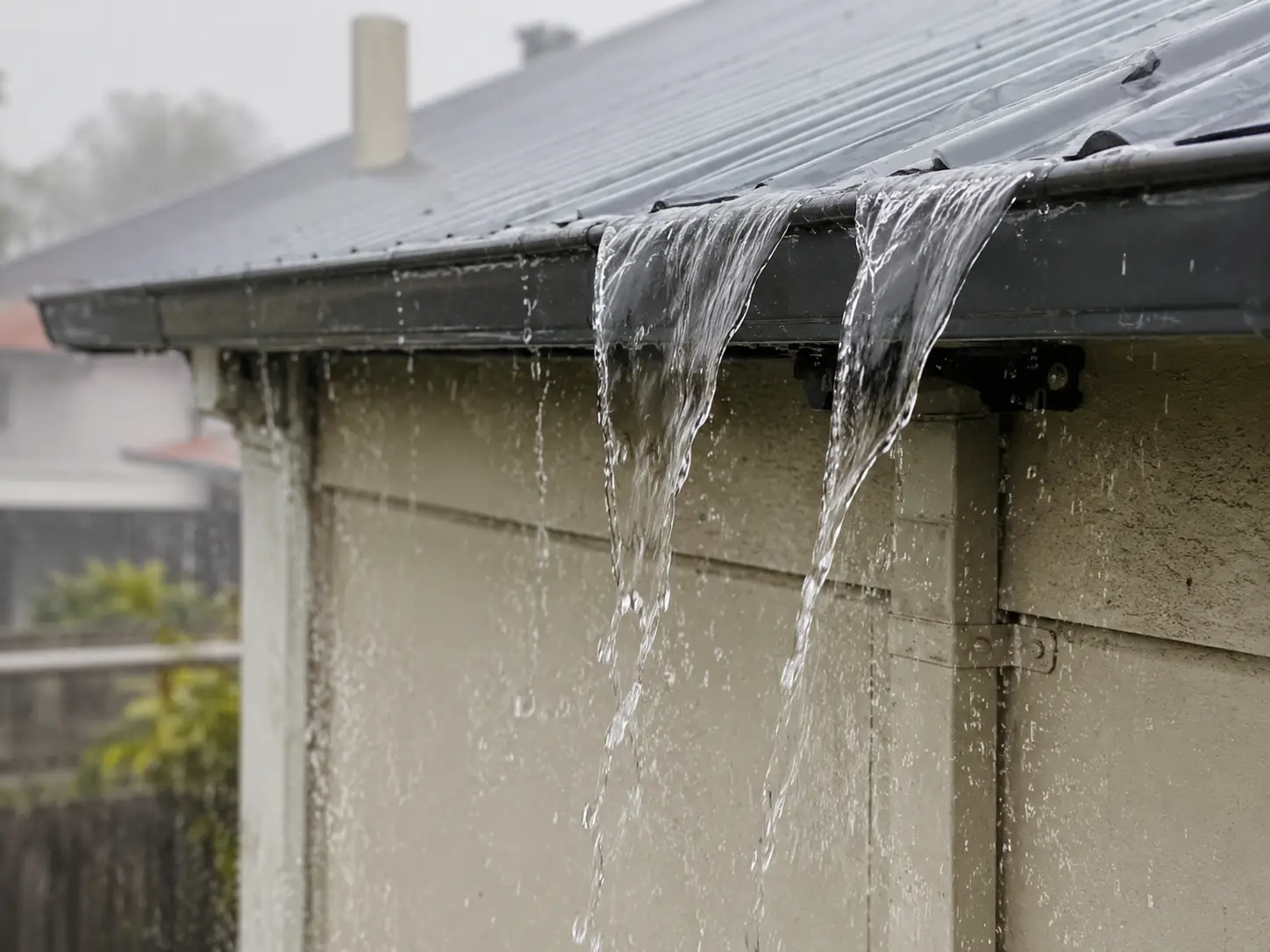
Overflow over the edge
What's happening
In steady rain, water spills over the front or back lip of the gutter instead of running along to the downpipe.
Why it matters
It means the gutter is full — clogged with leaves and silt, or sagging so water can't reach the outlet. That overflow runs straight down your walls and into the eaves.
What's next
Note where it spills. A photo mid-rain is gold — send it over and we'll tell you if it's a clean-out or a repair.
02
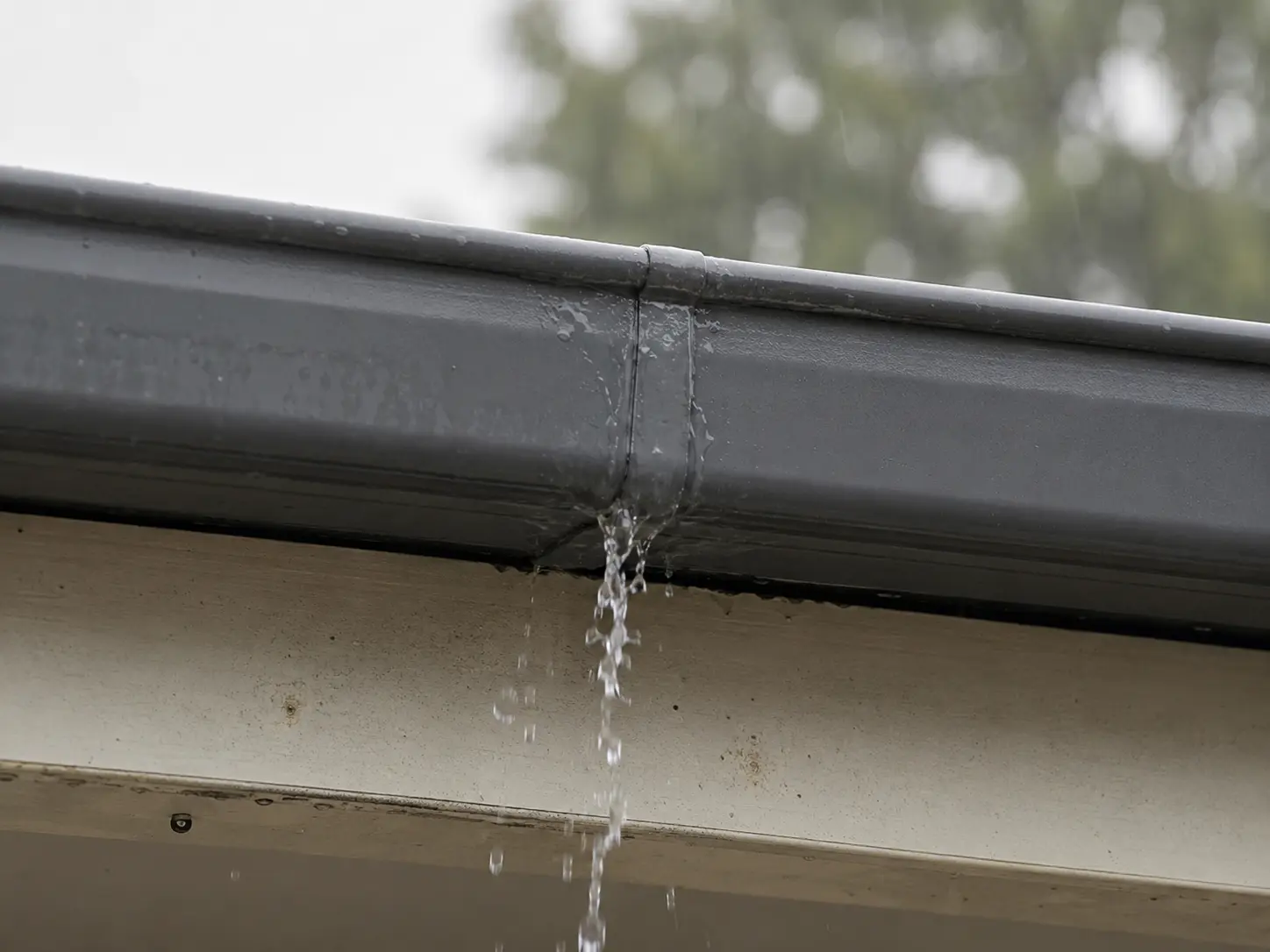
Waterfalls at the joints
What's happening
Water streaming or dripping from the joins between gutter lengths, or where the gutter meets a downpipe.
Why it matters
Joints are sealed with silicone that perishes over time. Once they leak, water gets behind the fascia and into the timber — quietly rotting it.
What's next
Leaking joints are an easy fix caught early and an expensive one left alone. Worth a look.
03
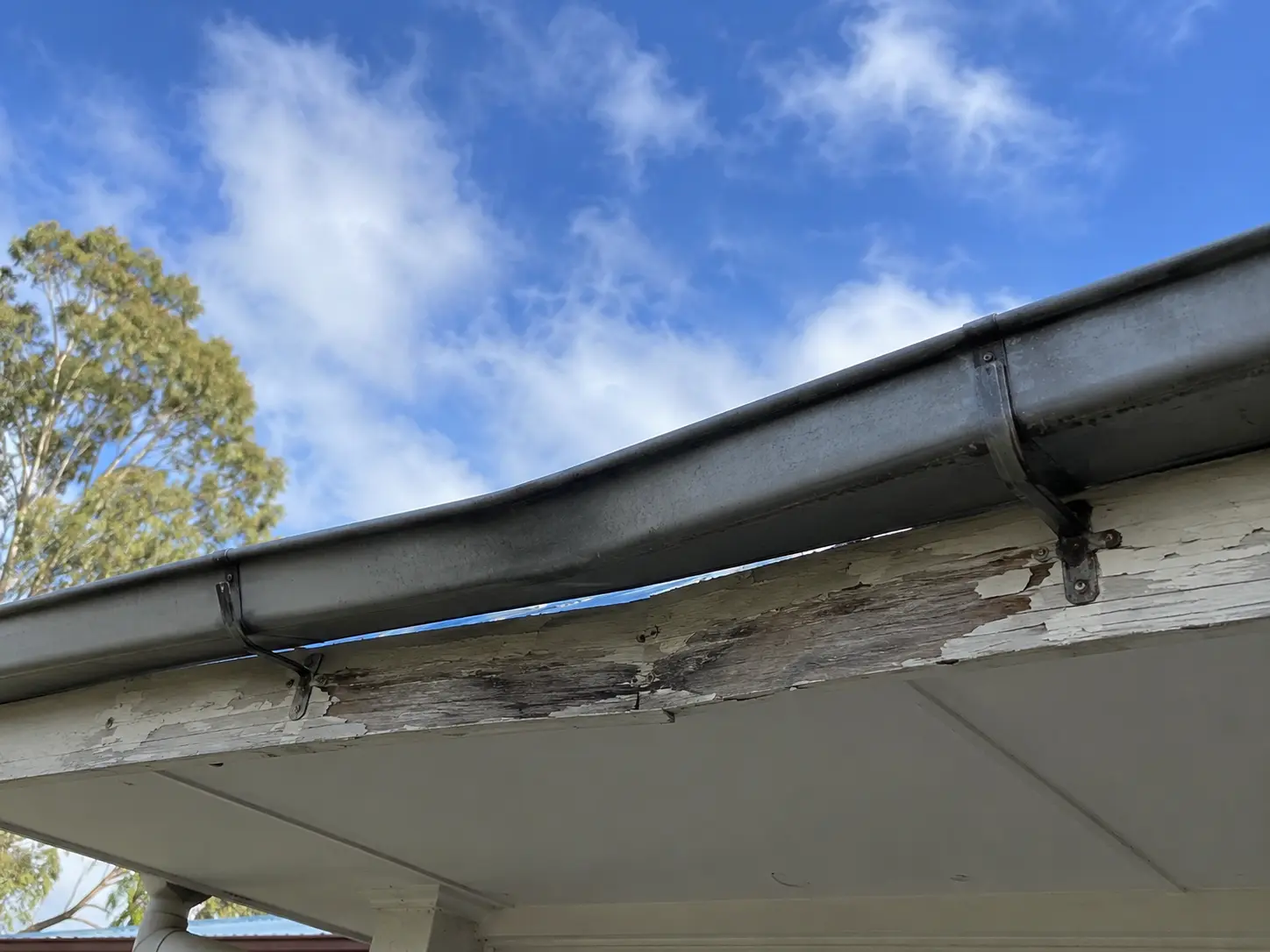
Sagging or pulling away
What's happening
Sections that dip in the middle, tilt the wrong way, or have come loose from the fascia board.
Why it matters
A sagging gutter holds water instead of draining it — adding weight, pooling, and slowly pulling its brackets out. Standing water speeds up rust, too.
What's next
Usually it's failed brackets or a fall that's gone off. Re-securing early avoids re-running the whole length later.
04
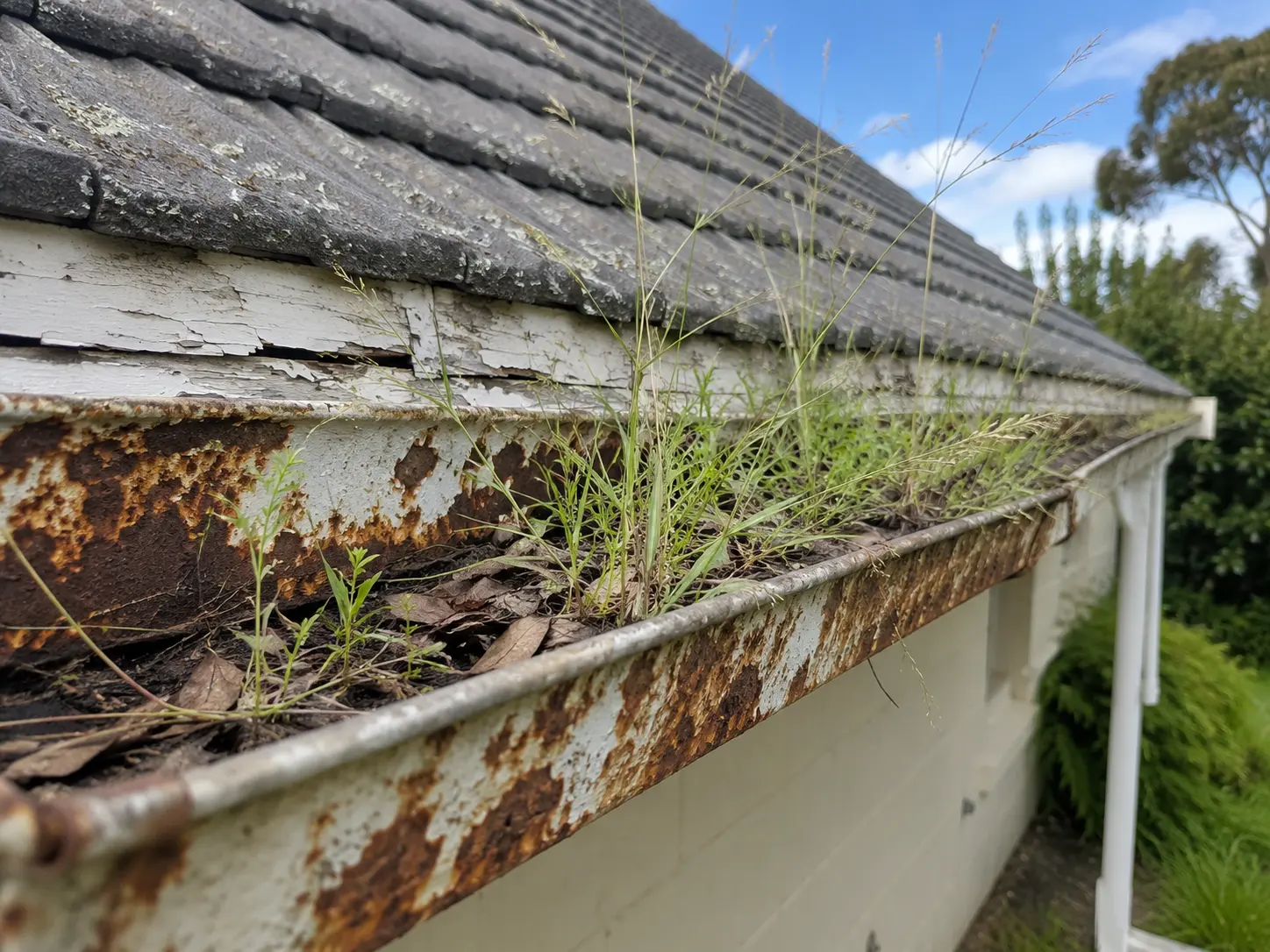
Rust, or plants growing in them
What's happening
Rust streaks and flaking inside the gutter, or actual greenery — grass, weeds, even little seedlings — growing along it.
Why it matters
Both mean debris and moisture have been sitting there a long time. Rust eats through the metal; plants mean the gutter has become a garden bed, not a drain.
What's next
Rust holes don't heal. A photo lets us judge whether it's a clean-and-reseal or time to replace that run.
Send us a photo
Not sure what you’re seeing? Show us.
Snap your gutters — during rain if you can — and upload the photo. A licensed plumber will look and tell you straight: clean-out, repair, or replace. No obligation.
Prefer email? Send photos to [email protected] · No charge for the read.
Next time it rains
We’ll remind you to check your gutters.
The signs above only show in the rain. Leave your postcode and we’ll email you a nudge when meaningful rain is forecast for your area — easy to stop anytime.
No spam — just a heads-up before the weather turns. Melbourne / Victoria.
Common questions
A few things people ask before sending a photo.
Do I need to get up on the roof?
No — please don't. Everything here is visible from the ground, and safest seen from under cover while it's raining. Leave the height access to us.
Is the photo check really free?
Yes. Send a photo and a licensed plumber gives you an honest read — clean-out, repair, or replace — with no call-out fee for the look and no obligation.
When's the best time to check?
During or just after steady rain — that's when overflow and leaking joints show themselves. Opt in to our rain reminder just above and we'll nudge you at the right moment.
What does a blocked gutter actually cause?
Water where it shouldn't be — into the eaves and fascia (timber rot), down external walls, into ceilings, and pooling around the foundations. Cheap to prevent, dear to repair.
What if it's more than a clean-out?
We'll say so plainly and give you a fixed price before anything happens — whether it's re-sealing joints, re-securing a sagging run, or replacing a rusted section.
We'd rather you didn't need us. When you do, we're here.