
How to Prepare Your Home for a Storm, Before It Hits
When a severe weather warning goes up for Melbourne, most of the advice you'll see is generic: secure loose items, stay indoors, keep clear of trees. All sound. But there's a smaller, more specific job that actually determines whether heavy rain stays outside your house or ends up in your ceiling: your gutters, downpipes and stormwater drains. A few minutes checking these before the rain starts is worth more than almost anything else on a general storm checklist.
Why gutters and downpipes matter most
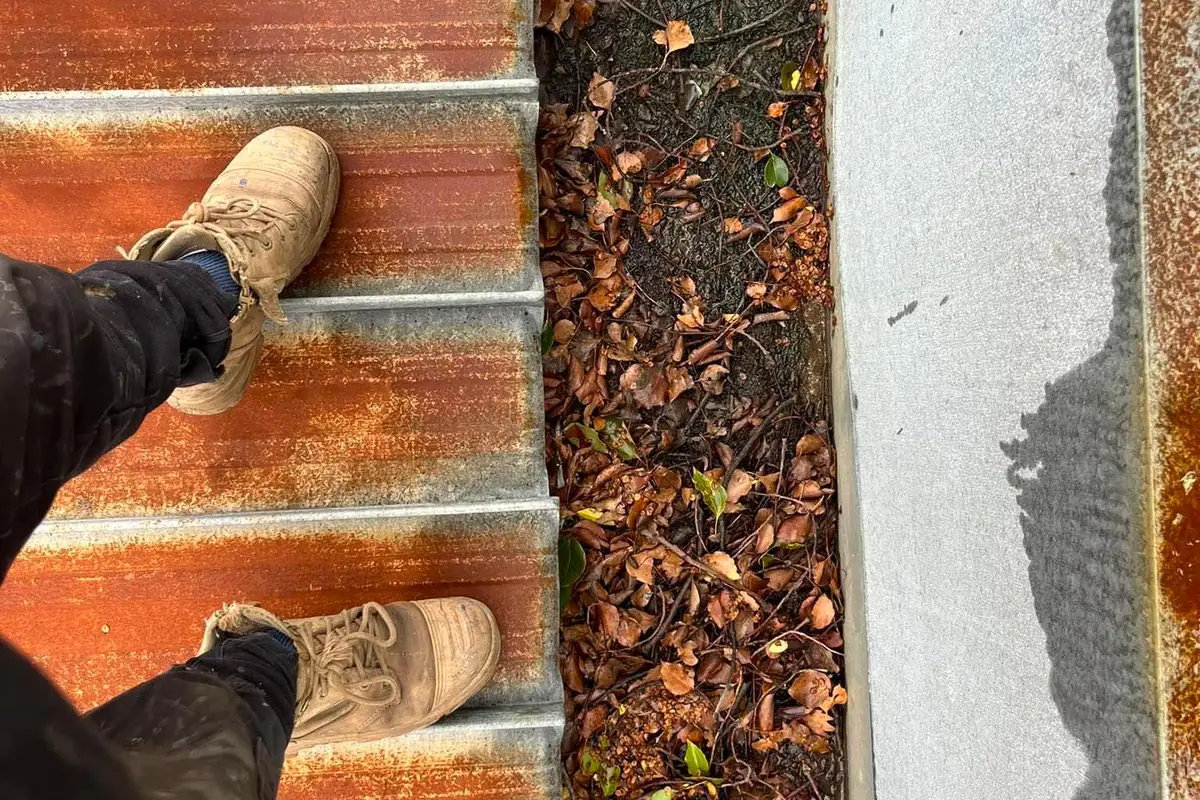
A downpipe's job is to get water off your roof and into the stormwater system as fast as it arrives. If it's blocked with leaves or debris, that water has nowhere to go but back up and over the gutter, or in through the roof itself. A blocked gutter does the same thing from a different angle: instead of draining away, it overflows straight down the wall, soaking fascia and eaves. That's not just a one-off mess. Repeated soaking is how hairline cracks appear in masonry over time, and once there's a crack, rot and mould get a way in that wasn't there before.
The five-minute check, before the warning goes up
If it's safe to do from the ground, this is worth running through as soon as heavy rain is forecast, not once it's already started:
- Clear visible leaves or debris from the gutter's edge and the top of each downpipe.
- Check stormwater grates and pits in the yard and driveway are clear.
- Look for any spot where water already pools in ordinary rain. That's an existing problem, not something this storm caused.
- Confirm nothing loose nearby (furniture, pots, mulch) could wash into a drain and block it mid-storm.
Don't get on a ladder once the wind's picked up or rain's already started. That check needs to happen before the warning, not during it.
Check your stormwater drains too, not just the gutters
Gutters and downpipes handle water from the roof. Stormwater drains handle everything that lands on your ground, driveway and paths. These fail for different reasons: debris blocking a grate or pit, a yard that slopes toward the house instead of away from it, or a drain that was sized for a smaller, older roof and simply can't keep up once heavy rain arrives. If you've noticed water pooling near the house even in ordinary rain, that's worth having looked at properly rather than waiting for the next downpour to make it obvious again.
What Victoria's own guidance says
Victoria State Emergency Service's storm-readiness guidance covers the same ground: clear gutters and downpipes, check drains and clear debris, keep trees and branches clear of the house, secure loose outdoor items, and park vehicles under cover where possible. The plumbing-specific part of that list, the gutters, downpipes and drains, is the part most easily overlooked because it's not as visibly dramatic as a loose trampoline or an unsecured umbrella. It's also one of the parts that can lead directly to water getting where it shouldn't.
Roof plumbing is a licensed trade, not just a roofer's job
Gutters, downpipes, flashing and box gutters fall under a separately licensed roof plumbing category in Victoria, regulated the same way as any other plumbing work. That matters for two practical reasons. First, if something needs fixing rather than just clearing, a sagging gutter, a disconnected downpipe, a stormwater line that can't keep up, that's licensed work, not a weekend DIY job. Second, unlicensed repairs to this kind of plumbing can create genuine problems with home insurance if something goes wrong later.
Safe to do yourself:
- Clearing visible debris from the ground.
- Checking grates and pits are clear.
- Keeping an eye out for pooling or overflow during normal rain.
Worth calling a professional for:
- Overflow that keeps happening even after clearing debris.
- A gutter that's visibly sagging or pulling away from the fascia.
- A stormwater drain that backs up regularly, not just in heavy storms.
If you're not sure which category your situation falls into, that's a reasonable enough reason to get it looked at rather than guess.
Safety comes before any of this
None of the above is worth a fall. Don't get on a roof or a ladder once wind has picked up, rain has started, or a severe weather warning is active. If water is pooling anywhere near a switchboard or power point, that's an electrical hazard, not a plumbing one. Call an electrician and stay clear rather than investigating it yourself.
If something's already not right
If you've checked and something's clearly wrong, or you'd rather have it looked at properly before the next warning goes up, that's exactly what our roof plumbing and stormwater services cover. If a drain's been backing up for a while, our blocked stormwater drains service sorts out the cause, not just this storm's symptom. And if it's been a while since anyone's actually looked at your roof, our post on booking a roof inspection covers why that's worth doing before the next warning, not after.